top of page

Zebra-tailed Lizard

Callisaurus draconoides
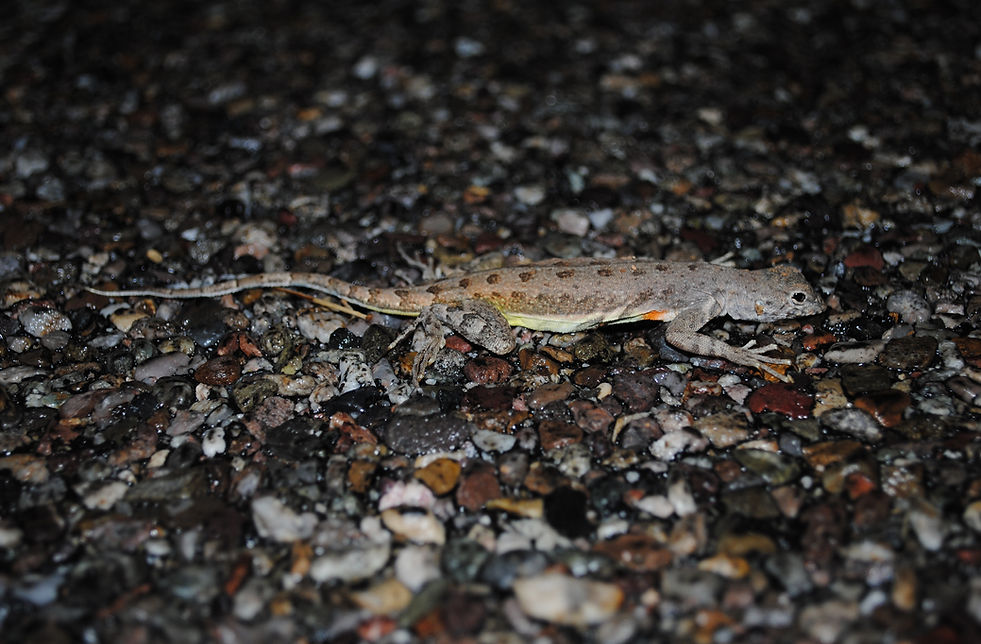
The Zebra-tailed Lizard is widely distributed across the southwestern United States and northwestern Mexico. Its range includes regions of Nevada, Arizona, New Mexico, California, Baja California, and extends south to Sinaloa. It can thrive from sea level in desert sinks up to elevations of approximately 1,520 meters (5,000 feet), inhabiting islands in the Gulf of California as well.

This species is predominantly found in flatlands, desert scrub, sandy washes, and areas with sparse vegetation that allow for open running space. While commonly associated with firm, sandy soils, it can also adapt to desert pavements and rocky arroyos. The subspecies C. d. crinitus, found in the Vizcaíno Desert, displays specialized adaptations for sandy environments.

Zebra-tailed Lizards are highly heat-tolerant and remain active during periods when most other lizards retreat to shelter. They are diurnal and sometimes observed sleeping on the surface during warm nights. When threatened, they display rapid bursts of speed, often running on their hind legs with their tail curled over their back, exposing the stark black and white underside. This tail movement may distract or confuse predators. Territorial behaviors such as head bobbing, push-ups, and body flattening are common in both sexes. They often bury themselves in loose sand for nighttime shelter or to escape predators.

An opportunistic feeder, the Zebra-tailed Lizard consumes a wide variety of prey. Its diet primarily consists of insects such as grasshoppers, beetles, caterpillars, and ants, as well as spiders and small lizards. Occasionally, they include plant material or arboreal prey like insects attracted to blossoms. Coastal populations have been observed feeding on amphipods and small crabs.

Breeding occurs in the spring, with females laying one or more clutches of eggs from May through August. Each clutch can contain 1–15 eggs, although typical clutch sizes range from 2–8. Eggs incubate for about 30 days, with hatchlings emerging by mid to late summer. Southern populations may produce more clutches annually compared to northern ones.

The Zebra-tailed Lizard’s unique escape tactics and tail markings are believed to serve as predator deterrents. By abruptly ceasing tail movements and blending into the sandy background, the lizard may confuse its pursuers. The species is distinguished from similar lizards like the Greater Earless Lizard by its external ear openings and specific body markings, such as forward-positioned side bars. Adaptations like toe fringes in certain subspecies reflect its versatility across varied desert landscapes.

The Zebra-tailed Lizard is a medium-sized lizard, typically reaching a length of 6.3–10.2 cm (2.5–4 inches) from snout to vent. Its body is slender with a slightly flattened tail and long, thin limbs that are perfectly adapted for rapid movement. The granular dorsal scales are accompanied by a distinctive pattern: two longitudinal rows of small dark spots run down the gray to tan back, often interspersed with cream flecks. Its most striking feature is its black crossbands on the white underside of the tail, which resemble "zebra stripes." Males exhibit vibrant blue and yellow markings on their bellies, surrounded by black bars, while females and juveniles lack these conspicuous belly markings. During the hottest part of the day, the lizard’s coloration can turn nearly white, reducing heat absorption and aiding in thermoregulation.

The Zebra-tailed Lizard is widely distributed across the southwestern United States and northwestern Mexico. Its range includes regions of Nevada, Arizona, New Mexico, California, Baja California, and extends south to Sinaloa. It can thrive from sea level in desert sinks up to elevations of approximately 1,520 meters (5,000 feet), inhabiting islands in the Gulf of California as well. This species is predominantly found in flatlands, desert scrub, sandy washes, and areas with sparse vegetation that allow for open running space. While commonly associated with firm, sandy soils, it can also adapt to desert pavements and rocky arroyos. The subspecies C. d. crinitus, found in the Vizcaíno Desert, displays specialized adaptations for sandy environments. Zebra-tailed Lizards are highly heat-tolerant and remain active during periods when most other lizards retreat to shelter. They are diurnal and sometimes observed sleeping on the surface during warm nights. When threatened, they display rapid bursts of speed, often running on their hind legs with their tail curled over their back, exposing the stark black and white underside. This tail movement may distract or confuse predators. Territorial behaviors such as head bobbing, push-ups, and body flattening are common in both sexes. They often bury themselves in loose sand for nighttime shelter or to escape predators. An opportunistic feeder, the Zebra-tailed Lizard consumes a wide variety of prey. Its diet primarily consists of insects such as grasshoppers, beetles, caterpillars, and ants, as well as spiders and small lizards. Occasionally, they include plant material or arboreal prey like insects attracted to blossoms. Coastal populations have been observed feeding on amphipods and small crabs. Breeding occurs in the spring, with females laying one or more clutches of eggs from May through August. Each clutch can contain 1–15 eggs, although typical clutch sizes range from 2–8. Eggs incubate for about 30 days, with hatchlings emerging by mid to late summer. Southern populations may produce more clutches annually compared to northern ones. The Zebra-tailed Lizard’s unique escape tactics and tail markings are believed to serve as predator deterrents. By abruptly ceasing tail movements and blending into the sandy background, the lizard may confuse its pursuers. The species is distinguished from similar lizards like the Greater Earless Lizard by its external ear openings and specific body markings, such as forward-positioned side bars. Adaptations like toe fringes in certain subspecies reflect its versatility across varied desert landscapes.

References:

Stebbins, R. C., & McGinnis, S. M. (2018). Peterson Field Guide to Western Reptiles and Amphibians (4th ed.). Houghton Mifflin Harcourt.
Brennan, T. C. (n.d.-e). Zebra-tailed Lizard. The Reptiles and Amphibians of Arizona. https://reptilesofaz.org/lizards-subpages/h-c-draconoides/
Brennan, T. C., & Holycross, A. T. (2006). A field guide to Amphibians and reptiles in Arizona (2nd ed.). Arizona Game and Fish Dept.

bottom of page