top of page

Sonoran Mud Turtle

Kinosternon sonoriense

This species is native to the southwestern United States and northern Mexico. Its range spans central and southeastern Arizona, the Gila and Salt River drainages, and parts of the lower Colorado River region. It is also found in the Big Sandy-Burro River drainages, Quitobaquito Springs, and isolated areas in New Mexico, including the headwaters of the Gila River. Elevations range from near sea level along the lower Colorado River to over 6,700 feet (2,040 m) in montane regions.

The Sonoran Mud Turtle occupies a variety of aquatic habitats, including rocky streams, creeks, rivers, cattle tanks, ponds, and ditches. It thrives in ecosystems ranging from Sonoran Desert scrub to piñon-juniper woodlands and ponderosa pine forests. Although primarily aquatic, it occasionally traverses terrestrial landscapes between water bodies.

This species displays a range of behavioral adaptations to its environment. It is most active during the day in spring and fall but shifts to nocturnal activity during the hotter summer months. In colder months, it hibernates in soil beneath water or in bank cavities. When threatened, it may release a strong-smelling musk as a defensive mechanism.

The Sonoran Mud Turtle is predominantly carnivorous, feeding on insects, snails, crustaceans, fish, frogs, tadpoles, and carrion. It also supplements its diet with plant material when available. Foraging typically occurs in aquatic environments such as pools and streams.

Mating occurs in water during the spring, and females lay clutches of up to 11 brittle-shelled eggs in underground nests. The nesting season extends from May through September, with some females laying multiple clutches in a year.

The species is divided into two recognized subspecies: the Sonoyta Mud Turtle (K. s. longifemorale), restricted to Quitobaquito Springs and its immediate drainage, and the Desert Mud Turtle (K. s. sonoriense), which occupies the remainder of the range. Human activities, such as dam construction, have significantly impacted some populations, particularly along the lower Colorado River. Despite these pressures, the Sonoran Mud Turtle remains an important component of its aquatic ecosystems.

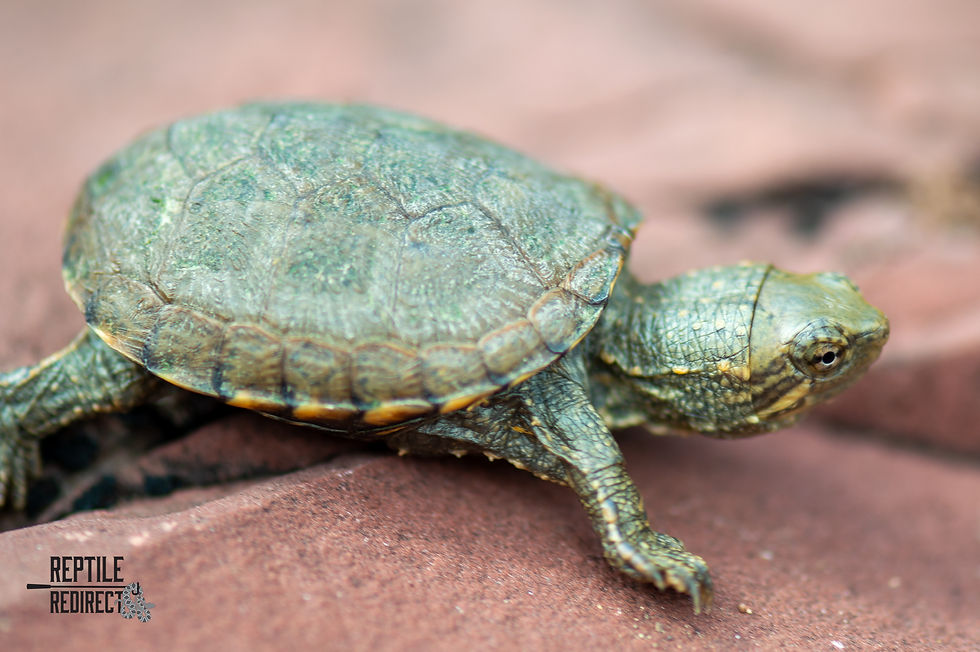
The Sonoran Mud Turtle is a small aquatic turtle, with its carapace measuring up to 7 inches (175 mm) in length. The olive-brown to gray-brown carapace features three subtle lengthwise keels, which become less distinct with age. The plastron, yellow to brown in color, is hinged at both the front and back, enabling the turtle to close it for protection. The throat has small fleshy projections, while the head and neck are adorned with intricate cream or yellow reticulations over a dark olive background, setting it apart from other mud turtles. Webbed feet aid its aquatic lifestyle, and males have a bony, claw tipped tail.
This species is native to the southwestern United States and northern Mexico. Its range spans central and southeastern Arizona, the Gila and Salt River drainages, and parts of the lower Colorado River region. It is also found in the Big Sandy-Burro River drainages, Quitobaquito Springs, and isolated areas in New Mexico, including the headwaters of the Gila River. Elevations range from near sea level along the lower Colorado River to over 6,700 feet (2,040 m) in montane regions. The Sonoran Mud Turtle occupies a variety of aquatic habitats, including rocky streams, creeks, rivers, cattle tanks, ponds, and ditches. It thrives in ecosystems ranging from Sonoran Desert scrub to piñon-juniper woodlands and ponderosa pine forests. Although primarily aquatic, it occasionally traverses terrestrial landscapes between water bodies. This species displays a range of behavioral adaptations to its environment. It is most active during the day in spring and fall but shifts to nocturnal activity during the hotter summer months. In colder months, it hibernates in soil beneath water or in bank cavities. When threatened, it may release a strong-smelling musk as a defensive mechanism. The Sonoran Mud Turtle is predominantly carnivorous, feeding on insects, snails, crustaceans, fish, frogs, tadpoles, and carrion. It also supplements its diet with plant material when available. Foraging typically occurs in aquatic environments such as pools and streams. Mating occurs in water during the spring, and females lay clutches of up to 11 brittle-shelled eggs in underground nests. The nesting season extends from May through September, with some females laying multiple clutches in a year. The species is divided into two recognized subspecies: the Sonoyta Mud Turtle (K. s. longifemorale), restricted to Quitobaquito Springs and its immediate drainage, and the Desert Mud Turtle (K. s. sonoriense), which occupies the remainder of the range. Human activities, such as dam construction, have significantly impacted some populations, particularly along the lower Colorado River. Despite these pressures, the Sonoran Mud Turtle remains an important component of its aquatic ecosystems.

References:

Stebbins, R. C., & McGinnis, S. M. (2018). Peterson Field Guide to Western Reptiles and Amphibians (4th ed.). Houghton Mifflin Harcourt.
Brennan, T. C. (n.d.-e). Sonoran Mud Turtle. The Reptiles and Amphibians of Arizona. https://reptilesofaz.org/turtle-amphibs-subpages/h-k-sonoriense/
Brennan, T. C., & Holycross, A. T. (2006). A field guide to Amphibians and reptiles in Arizona (2nd ed.). Arizona Game and Fish Dept.

bottom of page