
Western Massasauga
Sistrurus tergeminus
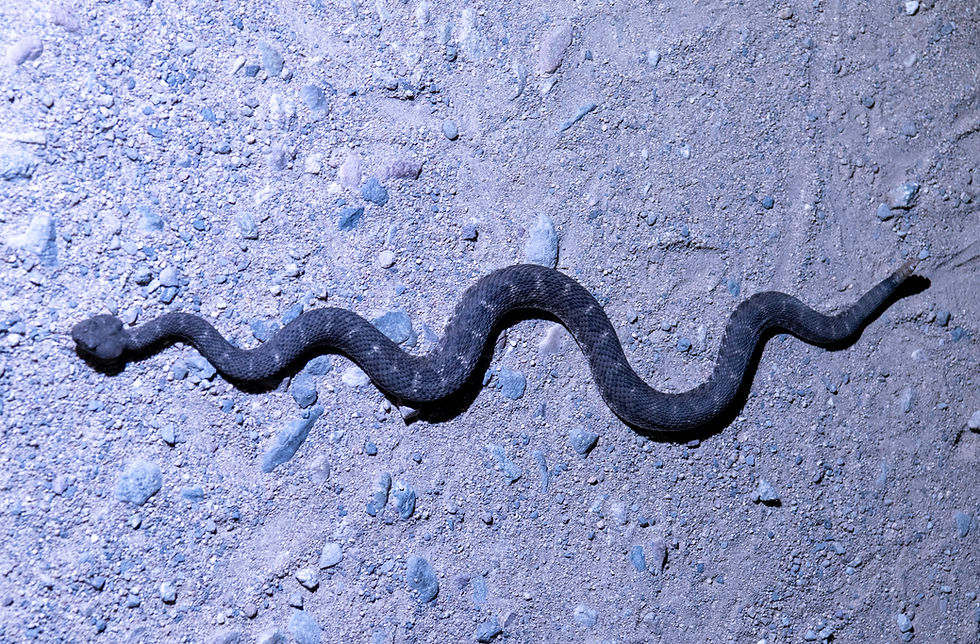
The Western Massasauga (Sistrurus tergeminus) is a small, venomous rattlesnake with a maximum length of approximately 35 inches (883 mm), though most individuals are closer to 22–24 inches (550–610 mm). It features a light gray to brownish-gray body adorned with large, crisp, oval-shaped dark blotches along the spine. Additional rows of faded or crisp-edged blotches are found along the sides. A distinct lyre-shaped marking on the top of the head is formed by two elongated dark blotches, which extend onto the neck. Juveniles possess a yellow tail used for luring prey, which turns light gray with brown bands as they mature. The head is broad and triangular, with plate-like scales covering the top, distinguishing it from most other rattlesnakes. The snake’s dorsal scales are keeled, and the rattle at the tail's end is composed of keratin segments added with each shedding.

The Western Massasauga is distributed across parts of the southwestern and central United States, including southeastern Arizona, southeastern Colorado, central and southeastern New Mexico, and the Rio Grande Valley. Its range is contracting, with some historic populations in Arizona extirpated due to habitat loss. It persists in isolated populations in extreme southeastern Arizona. This species inhabits a variety of grassland ecosystems, including semidesert grasslands, river bottoms, and low plains with sandy or well-drained soils. In Arizona, it is typically found in valleys, rolling grass-covered hills, and bajadas. Habitats often include areas of dense vegetation, such as mesquite, yucca, juniper, or agave, which provide cover and hunting opportunities. The Western Massasauga occurs at elevations ranging from approximately 3,500 to 6,890 feet (1,067–2,100 meters), depending on its specific locale. In Arizona, it occupies elevations between 3,500 and 4,600 feet. Primarily nocturnal, the Western Massasauga is sometimes active during the early morning or late afternoon, particularly in overcast weather. It spends significant time underground in rodent burrows and hibernates during colder months. When active, it may be found coiled in vegetation or traversing its grassland habitat. This snake’s diet consists of lizards, small mammals (such as woodrats and pocket mice), centipedes, and occasionally frogs or other small prey. Juveniles use their brightly colored tails to lure prey within striking range. Prey is subdued using highly toxic venom delivered through long, hollow fangs. The Western Massasauga is ovoviviparous, with females giving birth to 4–8 live young in late summer, typically from late August to September. Newborns are paler with more pronounced patterns than adults. The venom of the Western Massasauga is potent but delivered in small quantities. Though generally shy and non-aggressive, it should not be handled or provoked. Many snakebites occur when the animal is disturbed or mishandled. In Arizona, this species is protected by law, and it is illegal to harm, harass, or capture it. Conservation efforts focus on preserving its dwindling grassland habitats.


References:
Stebbins, R. C., & McGinnis, S. M. (2018). Peterson Field Guide to Western Reptiles and Amphibians (4th ed.). Houghton Mifflin Harcourt.
Brennan, T. C. (n.d.-e). Western Massasauga. The Reptiles and Amphibians of Arizona. https://reptilesofaz.org/snakes-subpages/h-c-cerberus/
Brennan, T. C., & Holycross, A. T. (2006). A field guide to Amphibians and reptiles in Arizona (2nd ed.). Arizona Game and Fish Dept.